



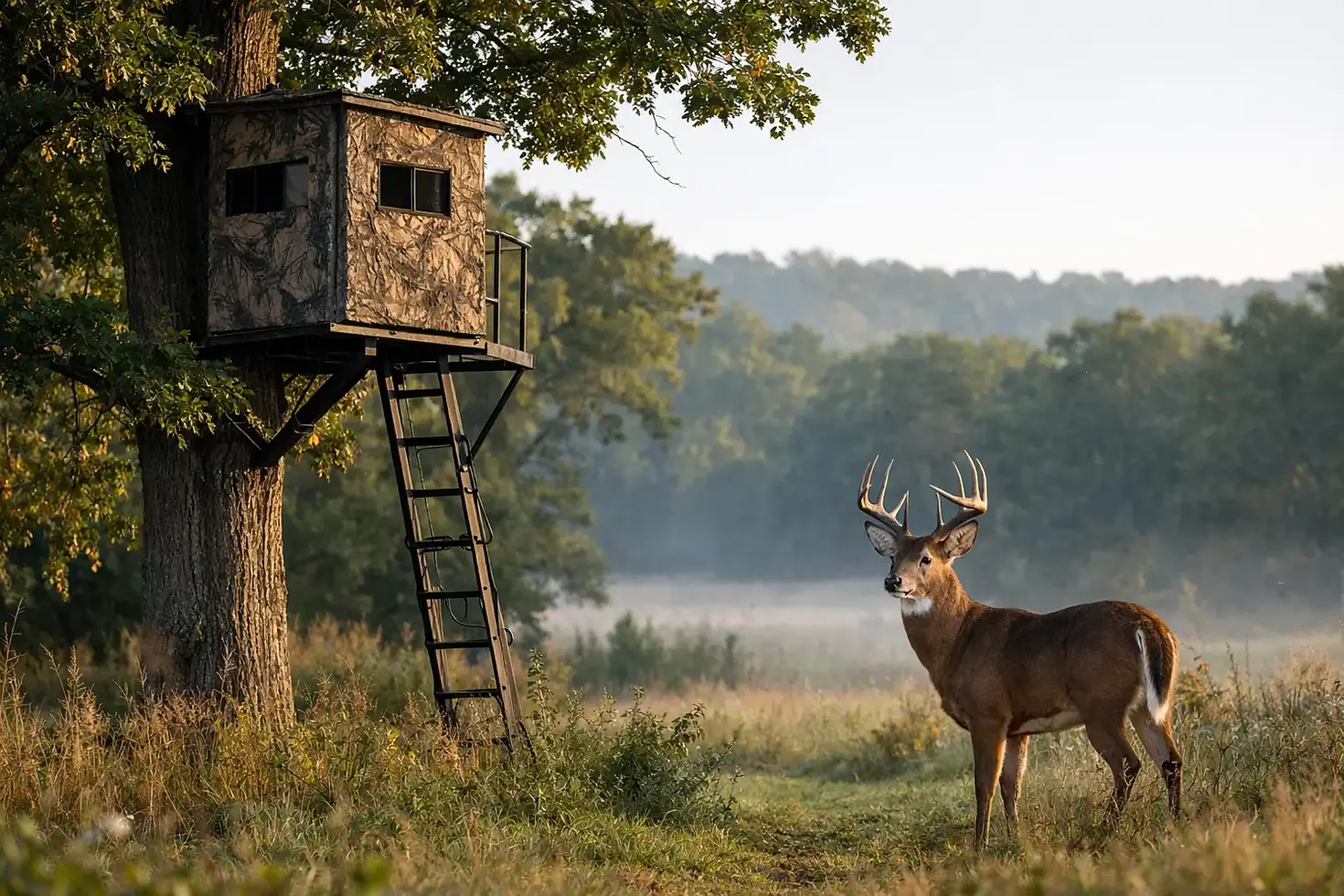
Deer Stand Placement Guide for Missouri Whitetails

A good deer stand placement guide starts with one hard truth: the best-looking tree is not always the best hunting tree. A big rub line, fresh tracks, and a wide trail can make a spot feel like a sure thing. But if your wind blows into the bedding cover or your walk in sends deer out of the field, that sign will not matter for long.
On real Missouri ground, stand placement is about putting the pieces together. Food, cover, terrain, wind, access, and the time of year all matter. The right setup lets you hunt close enough to a mature buck's routine without letting him know you are there.
Start With How Deer Use the Property
Before choosing a tree, identify the three areas that shape most deer movement: bedding cover, feeding areas, and the routes between them. In northern and northwest Missouri, that may mean a thick cedar draw or brushy timber edge leading toward a soybean field, corn, acorns, or a secluded food plot.
Deer do not travel every route with the same purpose. A trail cut deep into the dirt may be used after dark, especially if it runs directly from a large field to bedding cover. A smaller trail that skirts the downwind side of a ridge, follows a ditch, or slips through a pinch point may be far more valuable during legal shooting light.
Look for the places where travel naturally tightens. A fence corner, creek crossing, narrow timber neck, inside field corner, saddled ridge, or strip of cover between two open areas can put deer within range without forcing you to hunt right on top of a food source.
Fresh sign helps confirm the route, but do not rely on sign alone. Ask what the deer is doing there and when it is likely to be there. A stand location should match a daylight movement pattern, not simply the most tracks.
Wind Is the First Stand Placement Filter
If a deer catches your scent, the hunt is usually over before you ever see it. That makes wind direction the first filter for every stand site. Choose a location where the expected wind carries your scent away from the trail, bedding cover, and likely approach route.
This sounds simple until the ground starts influencing the air. Missouri's rolling terrain, creek bottoms, timbered draws, and field edges can create shifting currents. A steady forecast at the truck may become a swirling wind once you are tucked into a low hollow or sitting near a steep ridge.
For that reason, do not place every stand on the same side of a field or travel corridor. A property needs options for different wind directions. One setup may work on a northwest wind along a timber edge, while another is better for a south or southeast wind near a ridge transition.
Pay attention to thermal movement as well. In the morning, cooling air often settles downhill. As the day warms, rising thermals can carry scent uphill. Those patterns are not identical every day, especially with cloud cover and changing weather, but they matter on close setups near bedding cover.
A stand that is slightly farther from the main trail but has a dependable wind is usually the better choice. Mature bucks survive by using their nose. Give them a reason to trust the route before you expect them to use it in daylight.
Plan Entry and Exit Before You Hang a Stand
A stand is only as good as your ability to reach it without alerting deer. Many hunters find a productive-looking location, hang a stand, and then realize their access route crosses the same trail they expect to hunt. By the time they climb in, they have already left scent, made noise, or bumped deer from cover.
Work backward from the stand tree. Decide where you will park, which path you will use, where the wind will carry your scent while walking, and how you will leave after dark. If your route requires walking through a food source, crossing an open field where deer can watch, or cutting through bedding cover, reconsider the setup.
Creek beds, field ditches, low draws, and screened timber edges often provide quieter access. They are not perfect, but they can keep you out of sight and reduce the chance of pushing deer. During wet conditions, they may also hold scent differently than dry leaves or dusty field edges. Conditions matter, so use the route that makes sense for that day rather than forcing a favorite path.
Exit is often the overlooked part. A stand can produce all evening, then get ruined when you climb down and walk through the field as deer filter out after dark. If you cannot leave cleanly, consider hunting the location only under conditions where you can wait deer out or use a route that keeps you separated from feeding activity.
Set Up for the Time of Day
Morning and evening stand locations should not always be the same. In the morning, deer are generally returning toward bedding cover. Evening movement usually carries deer toward food. The best stand depends on which movement you can hunt without being detected.
For morning hunts, stay off the edge of primary bedding cover unless your access and wind are exceptionally clean. A mature buck may be close to bed before daylight, and one careless approach can move him out before you are settled. Morning stands often work best on a travel route that lets you intercept deer before they reach their secure cover.
For evening hunts, field edges can be productive, but the obvious edge is not always the place to sit. Consider a staging area 50 to 100 yards inside the timber, where deer gather, browse, and check the wind before stepping into an open field. These areas can offer earlier movement, especially during warm early-season afternoons or when hunting pressure has deer reluctant to expose themselves before dark.
During the rut, movement can become less predictable, but the same rules hold. Find doe bedding areas, travel corridors, and terrain features that allow bucks to cover ground while scent-checking for does. A downwind side of a ridge, a bench above a thick draw, or a narrow strip of cover between bedding pockets can be a strong rut setup if the wind allows it.
Use Terrain to Bring Deer Into Range
Missouri whitetails use terrain to travel efficiently and stay covered. Learn to see the features that guide them. A ridge saddle gives deer an easier crossing point. A bench can create a natural travel shelf along a hillside. A creek crossing concentrates movement where the banks are manageable. A point of timber reaching into a field can funnel deer around its edge.
Do not assume every funnel is worth hunting. A pinch point that forces deer into range may also force your wind directly into them. It may be too exposed for a clean approach. The best funnels are useful because they combine movement, cover, wind, and access, not because they look good on an aerial map.
Inside corners deserve attention, especially where mature timber meets crops or a food plot. Deer often use the cover along those corners to enter a field cautiously. Set back far enough to avoid being silhouetted against the opening, and trim only what you need for ethical shooting lanes. Over-clearing can make a stand tree stand out and remove the cover that makes deer comfortable using the area.
Choose the Right Tree and the Right Height
Once the location is right, choose a tree that keeps you concealed and gives you safe, usable shooting opportunities. A straight, healthy tree with cover behind and around the stand is preferable to an open tree that leaves you exposed from every direction. The tree should also allow safe climbing and a solid connection for your stand.
Height depends on the terrain, available cover, shot angles, and how close deer will be. Higher is not automatically better. Climbing too high can create steep shot angles, reduce effective shooting lanes, and make entry more difficult. Too low can put you in a deer's line of sight. The right height is the one that breaks up your outline while keeping shots practical and safe.
Set the stand with the expected deer movement in mind. Give yourself room to draw a bow or shoulder a firearm without brushing limbs or turning sharply in the seat. Clear shooting lanes carefully, favoring small, natural openings rather than cutting a wide window through the woods. Then practice judging distance from the stand before the hunt, not when a buck is walking through.
Always use a full-body safety harness from the moment you leave the ground until you are back down. Inspect stands, straps, ladder sections, and lifelines before the season. Good placement does not help if the setup is unsafe.
Avoid Burning Your Best Locations
The closer a stand is to a mature buck's core area, the more carefully it should be hunted. A low-impact setup may handle repeated sits if access is clean and the wind stays right. A tight bedding-area stand might be a one- or two-time opportunity saved for the best conditions.
Trail cameras can help confirm movement, but check them with purpose. Walking in every few days, leaving scent on trails, and lingering around a prime location can do more damage than the photos are worth. Use cameras on field edges, access routes, or low-impact observation points when possible, and let the sign and wind guide the rest.
On a semi-guided hunt, local knowledge can shorten the learning curve. At Missouri Outfitters MCCO, veteran guides understand how deer use the fields, timber, and rolling ground, but the hunt still comes down to making disciplined choices in the stand. Hunt the wind you have, respect the access route, and do not force a location because it looked good at midday.
The best stand placement is rarely the flashiest spot on the property. It is the tree you can reach quietly, hunt safely, and leave without educating the deer. Put that kind of thought into every setup, and your stand will be waiting in the right place when a Missouri whitetail finally makes a mistake.


Comments