



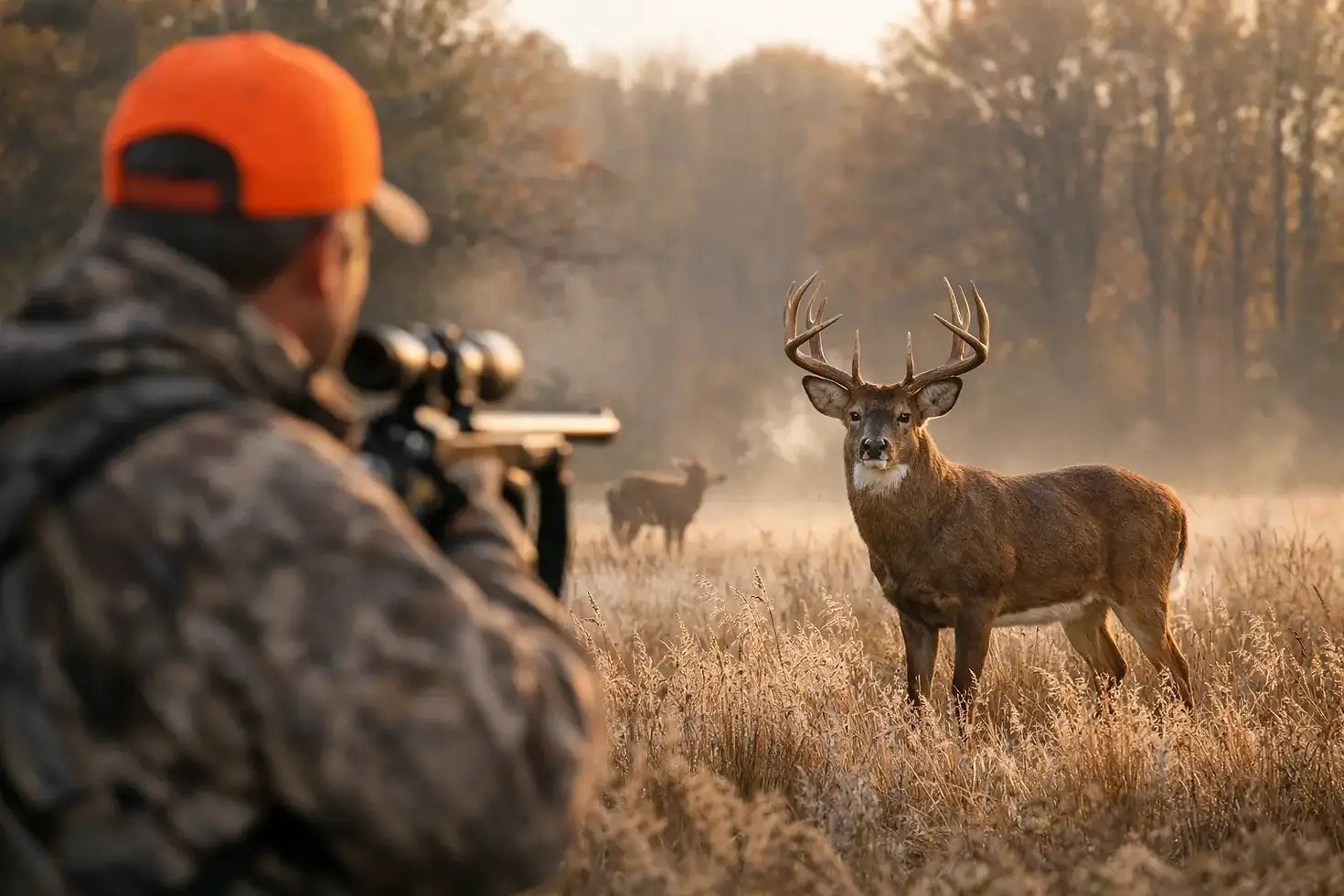
Best Time for Missouri Rut Hunt Trips

Cold mornings, fresh scrapes on field edges, and bucks covering ground in daylight - that is why hunters ask about the best time for missouri rut hunt trips before they lock in dates. The truth is there is no single magic day. Missouri rut hunting is best understood in phases, and the right week depends on whether you want more predictable patternable movement, more cruising activity, or the best shot at a mature buck making a mistake.
When is the best time for a Missouri rut hunt?
If you want the short answer, the best time for a Missouri rut hunt is usually the first half of November, with a strong window running from about November 1 through November 15. That stretch gives hunters a real mix of pre-rut movement, chasing, cruising, and early breeding behavior. In northern and northwest Missouri, where agricultural ground, timber, and rolling terrain all come together, that period consistently puts bucks on their feet in legal shooting light.
That said, the rut does not happen like flipping a switch. Deer movement changes by the week, sometimes by the day, based on temperature, pressure, doe activity, and hunting disturbance. A hunter who understands those moving parts usually makes better date choices than the one who only circles one so-called peak day on the calendar.
The rut phases that matter most
Late October: the setup window
Late October is often overlooked by hunters who only want chaos and chasing, but it can be one of the smartest times to hunt. Bucks are opening up their travel patterns, checking scrapes more regularly, and spending more daylight time on their feet. They are not fully reckless yet, which can actually help a disciplined hunter.
This phase tends to reward good stand placement near transition areas, inside corners, staging cover, and downwind sides of doe bedding. Mature bucks still use caution, but they begin exposing themselves earlier and more often. If you prefer a hunt that feels more pattern-based than random, the last week of October deserves real attention.
November 1-7: cruising starts to build
For many hunters, this is where the best time for missouri rut hunt planning really begins. Bucks start covering more ground, checking doe groups, scent-checking bedding areas, and moving with more purpose during daylight. You may not see nonstop chasing every sit, but you often see the kind of movement that kills good deer.
This is a strong window for hunters who want a balance between rut activity and huntable behavior. Bucks are active, but they are still vulnerable around funnels, pinch points, ridge crossings, and field-to-timber transitions. In real Missouri country, where terrain and habitat edges matter, that can be a very productive combination.
November 8-15: peak action for many hunters
This is the window most people are trying to hit. It is when cruising, seeking, chasing, and breeding overlap enough to create the classic rut hunt most hunters picture. A mature buck may show up at any hour, and all-day sits start making more sense.
The trade-off is that movement can become less predictable. One buck may be running hard at 9:30 a.m., while another locks down with a doe in thick cover and disappears for a day or two. That is why this phase is exciting, but not always easy. You give up some consistency in exchange for the chance that a big buck simply loses his discipline.
Mid to late November: secondary opportunity
Once the first major wave of breeding settles, some hunters assume the rut is over. It is not. There is often a secondary window where bucks resume searching for unbred does, especially around food and bedding connections. Movement may not be as wild as the first half of November, but it can still be very good.
This period becomes more attractive when colder weather settles in and deer return to more dependable feeding patterns. If you missed the early November rush, this is still a worthwhile time to be in the woods.
What actually changes buck movement in Missouri
Calendar dates matter, but conditions matter too. Any honest outfitter should tell you that the rut does not play out exactly the same every season.
Temperature is a big factor. You can have good rut timing on the calendar, but if daytime highs stay warm and nights are not cooling off much, daylight movement may feel flat. A sharp temperature drop in early or mid-November often improves visible movement fast, especially in the mornings and on evening transitions.
Hunting pressure matters just as much. Bucks in pressured country can go nocturnal fast, even during the rut. On managed ground with a disciplined approach, deer tend to stay more huntable. That is one reason serious hunters look for a smaller, more controlled camp instead of a crowded operation where too many boots hit the same property all week.
Doe distribution also changes the hunt. If does are spread out across several bedding pockets, bucks may seem harder to pin down. If food, cover, and doe groups are concentrated, travel corridors become more reliable. That is why local land knowledge is never just a nice extra. It is part of making the right call on where to sit during each rut phase.
Best hunt dates by hunter goal
If your goal is to hunt a mature buck that still follows somewhat repeatable patterns, target late October through roughly November 5. You may not get as much drama, but you often get cleaner movement around stand locations that make sense.
If your goal is maximum rut activity and the chance to see multiple bucks on their feet during daylight, focus on about November 5 through November 15. This is the most popular stretch for a reason. It brings real opportunity, especially for hunters willing to sit longer and stay mentally sharp.
If your goal is to avoid the absolute busiest demand window while still hunting rut-related movement, the back half of November can be a smart play. You may catch bucks on a second wave of searching, and colder conditions can help evening hunts around food.
Morning or evening during the rut?
During the Missouri rut, mornings usually get the most attention, and for good reason. Bucks often cover ground after first light as they check bedding areas, scent trails, and doe concentrations. In many cases, the first few hours of the day can be the strongest.
But evening hunts should not be brushed aside. In agricultural areas and mixed timber country, evening movement can improve when does stage toward food and bucks shadow that movement. During active rut periods, midday can also be very good. A lot of mature bucks get killed between 10 a.m. and 2 p.m. because they are still searching while hunters start losing focus.
If your schedule allows it, all-day sits become more valuable in peak rut windows. Not every day justifies it, but during the first half of November, staying put often beats climbing down too early.
Why northern and northwest Missouri stay attractive
Hunters travel to this part of the state because the habitat mix makes sense for whitetails. Crop fields, creek bottoms, timber, brushy draws, and rolling terrain all create natural travel and bedding patterns. When the rut starts to pull bucks into daylight, those transitions become huntable in a practical way.
That does not guarantee an easy hunt. Mature bucks still use terrain, wind, and cover well. But on good private ground with solid management, you get the kind of setup serious hunters are looking for - enough food, enough security cover, and enough age structure to make November worth planning around.
This is also where a semi-guided format can help. Hunters still get the freedom to hunt, but they are not showing up blind. At Missouri Outfitters MCCO, that kind of support matters most during the rut, when small details about entry routes, wind, pressure, and doe activity can decide whether a good week turns into a great one.
The mistake hunters make when choosing rut dates
The biggest mistake is chasing the idea of one perfect day instead of booking the right window. Rut hunting is about giving yourself enough time inside a productive phase. A three- to five-day hunt during a strong window usually beats gambling everything on one exact date that looked good online.
The second mistake is ignoring weather and property conditions once dates are set. A good plan should still be flexible. If a cold front hits, if doe movement shifts, or if one farm starts showing more sign than another, adapting matters.
A Missouri rut hunt is at its best when timing, ground, and discipline all line up. If you want the safest answer, hunt the first half of November. If you want the more complete answer, pick the phase that matches how you like to hunt, then make sure the property and support behind the trip are just as solid as the dates. Good rut hunts are not built on hype. They are built on timing, pressure control, and being in the right place when a buck finally does what bucks do in November.


Comments