



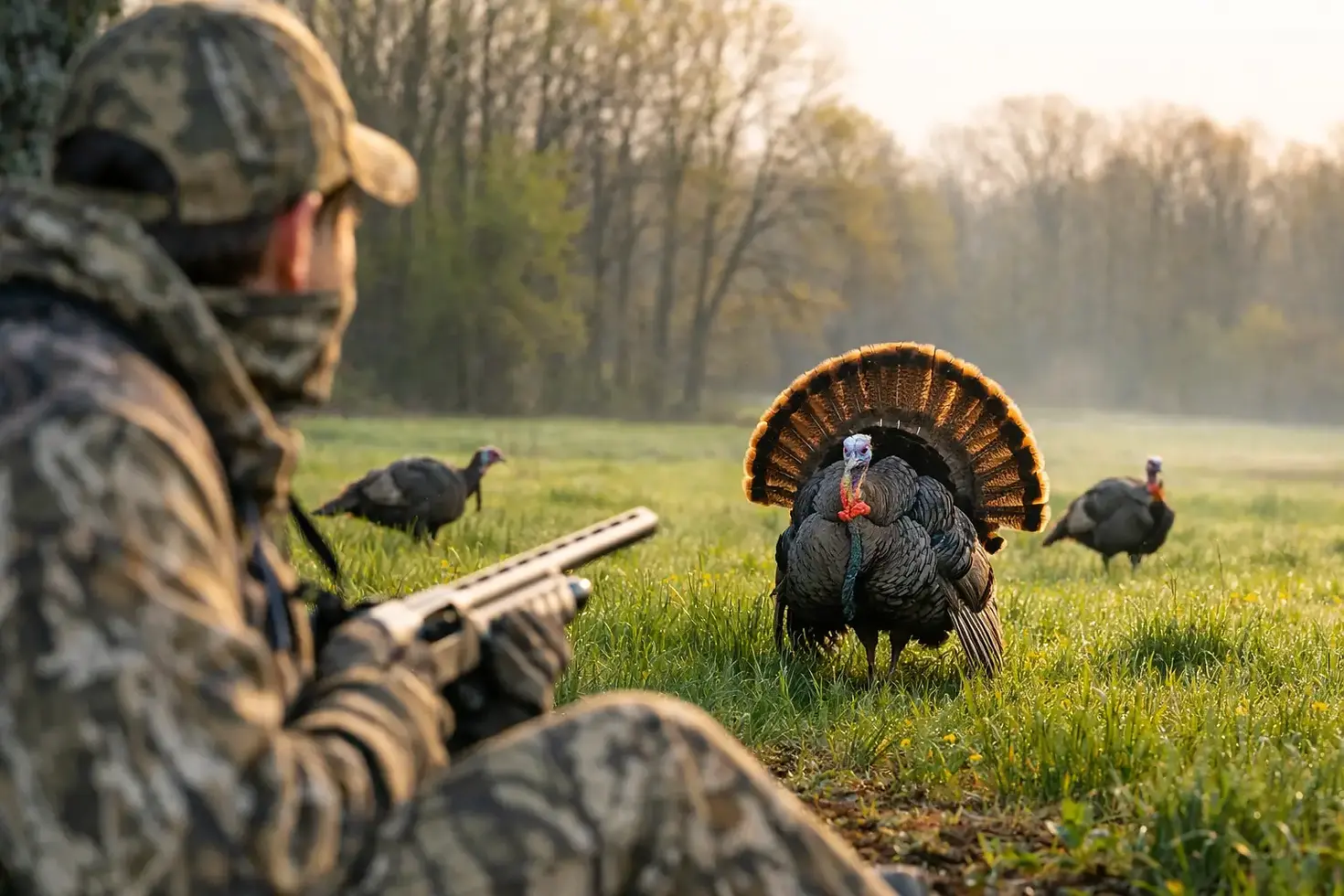
Spring Turkey Hunts Missouri Hunters Trust

That first gobble before daylight tells you a lot. It tells you whether the birds made it through the night where you thought they would. It tells you if your scouting paid off. And on spring turkey hunts Missouri hunters travel for, it usually tells you one more thing - this is not a place to show up guessing.
Missouri has earned its reputation for spring turkey hunting because the habitat still fits the bird. You get a mix of timber, field edges, rolling ground, creek bottoms, and travel corridors that let turkeys do what turkeys have always done. Roost in cover, pitch into open ground, work ridges, drift field edges, and test every setup a hunter thinks is perfect. That is part of why a Missouri hunt can be so good when it comes together, and why it can humble a man fast when it does not.
Why spring turkey hunts Missouri still draw serious hunters
A good spring turkey hunt starts with land that gives birds room to live naturally. Missouri has plenty of that, especially in country where agriculture and timber meet. Hens can feed, gobblers can strut, and birds can move through terrain that creates real huntable patterns instead of random sightings.
That matters more than flashy promises. Serious hunters are not looking for a staged experience. They want productive private ground, birds that have not been pressured to death, and enough room to hunt without feeling stacked on top of another group. The best hunts in Missouri are built around that simple formula.
The other reason hunters keep coming back is the style of the hunt itself. Spring turkey season is active. You are listening, adjusting, slipping ridges, setting up on field corners, and trying to make the next decision better than the last one. It is a hunt that rewards patience, woodsmanship, and restraint. For hunters who enjoy earning it, Missouri is a strong fit.
What makes a good spring turkey camp
Not every outfitted hunt is built the same, and that shows up fast in turkey season. A good camp should make the hunt easier without taking the hunt away from you. That means clean lodging, solid meals, clear communication, and guides who know the ground well enough to help you make smart decisions before daylight and after fly-down.
For many hunters, semi-guided is the sweet spot. You get support where it matters most - access, property knowledge, bird movement, and camp logistics - but you still do your own hunting. That works especially well for turkey hunters who know how they like to call, set up, and move. They do not want to be micromanaged. They want the right ground and honest help.
There is a trade-off here. A fully guided hunt can be a good choice for a newer hunter or someone bringing a youth hunter. But for experienced hunters or small groups, semi-guided often gives more freedom and a more natural pace. You can hunt hard, hunt quiet, or adjust based on what the birds are doing that day.
What to expect on spring turkey hunts in Missouri
The best spring turkey hunts in Missouri are usually not about constant action. They are about timely action. A bird may gobble hard on the limb and then go quiet. Another may not say much at all until he is inside shotgun range. Some mornings the birds hit open fields fast. Other mornings they hang in timber and make you wait them out.
That is why property layout matters. Bigger, well-managed tracts give you options. If a bird is henned up on one ridge, you may have another field edge or creek crossing producing better movement on the other side of the farm. On smaller or crowded ground, one blown setup can ruin the morning. On quality private land, you can recover and keep hunting.
Weather plays into it too. Warm, calm mornings can be great for hearing birds at distance. Wind can shut down gobbling or at least make birds harder to locate. Rain changes movement, and heavy pressure changes attitude fast. Missouri birds are huntable, but they are still wild birds. A good outfitter helps you deal with conditions instead of pretending every day should look the same.
Terrain matters more than most hunters think
A lot of people talk about bird numbers. Fewer talk about how the ground hunts. That is a mistake.
Real Missouri turkey country is not just scenic. It creates setups. A logging road through timber gives you a clean place to sit with visibility. A field corner bordered by brush gives a gobbler a comfortable approach. A ridge top lets you hear multiple drainages at daylight. Rolling ground can hide your movement and help you cut distance without getting seen.
Flat, open country can hold birds, but it does not always hunt easy. Too much visibility can make every approach risky. Heavy timber can be productive, but if the understory is thick and the terrain gives you no sound advantage, calling becomes guesswork. The best properties tend to offer a balance. Birds have enough cover to feel secure and enough openings to make them huntable.
That is one reason northern and northwest Missouri continue to appeal to traveling hunters. The mix of agriculture, timber, and rolling ground creates natural turkey habitat and practical hunt setups in the same place.
Why smaller operations often produce a better hunt
Turkey hunters notice pressure fast, even if the birds do not always show it right away. Too many trucks, too many hunters, and too many bad setups can sour a property in a hurry. That is why smaller outfitting operations often make more sense than high-volume camps.
If a camp is trying to fill every room and every acre every week, the hunt starts to feel managed for turnover instead of hunter success. Hunters get rotated through spots too quickly. Good ground gets burned up. Flexibility disappears.
A smaller camp can keep things tighter. Fewer groups on the property means less overlap, quieter mornings, and more room to adjust when birds change patterns. It also means better communication. Instead of feeling like another reservation number, you get direct answers, practical scouting insight, and the kind of field support that only comes when an outfitter is paying attention.
That is part of the value in working with an operation like Missouri Outfitters MCCO. The goal is not to crowd camp and push volume. It is to put hunters on real Missouri ground with experienced support and let the hunt be the main event.
How to know if a Missouri turkey hunt is worth booking
Start with the land. Ask what kind of terrain you will be hunting and whether the properties are managed with hunting pressure in mind. Ask how many groups are in camp at one time. Ask what kind of support is actually included, not just what sounds good in a short description.
Then look at the full experience. Destination hunting is not only about access to birds. It is also about whether travel, lodging, meals, and field planning are handled in a way that lets you focus on the hunt. When those basics are done right, you hunt better. You sleep better, eat on time, and spend more energy making good decisions in the field.
It is also fair to be honest about what you want. Some hunters want maximum independence. Others want regular guide input and a tighter game plan. Neither is wrong, but the right outfitter for one may not be the right fit for the other. The best booking decisions happen when expectations are clear on both sides.
The right hunt is the one that feels real
Spring turkey hunting does not need polish. It needs good ground, birds that act like wild birds, and a camp that respects why you came. That is what keeps hunters returning to Missouri year after year.
If you are looking at spring turkey hunts Missouri has to offer, focus on the pieces that actually matter. Productive private land. Room to hunt. Straight answers. Veteran support. Practical lodging and meals. A setup that helps you hunt hard without turning the whole trip into a production.
When those pieces are in place, the hunt feels right from the first predawn listen to the last evening sit. And if the birds make you work for it, all the better. That is usually how you know you are hunting the real thing.


Comments